

A Stationary Bicycle Provides a Low-Intensity Aerobic Workout
Exercise bikes, or stationary bikes, are an easy and low-impact workout. This kind of bike is popular among individuals who are looking for an exercise that is cardiovascular or for those who are undergoing physical therapy, like knee rehabilitation.
All forms of cardio exercise help to burn calories and build muscles. But riding a stationary bicycle targets different muscles, depending on the kind of exercise you're doing.
Aerobic Exercise
Exercise bikes can be utilized on the treadmill outdoors or indoors. They are a great cardio workout and increase leg strength. This type of exercise is ideal for people suffering from lower-body injuries or those who are overweight. However, before starting any new exercise routine, it is recommended to talk to your doctor or healthcare professional. They can assist you develop a fitness program that meets your health needs and goals, without causing any harmful side effects.
During a typical aerobics session it is crucial to begin slowly and gradually increase the intensity of your exercise. This reduces the risk for injuries and can help stop muscle shock. Warming up with some moderate exercise or stretching prior to hitting the gym is also an excellent idea. Keep track of your heart rate while working out as it can be a reliable gauge of the speed or intensity at which you are working. If your heart rate is too much, it's an indication that you're working too hard and should be easing off to avoid injuries.
If you've never been active regularly, it's an ideal idea to start with moderate to low-intensity exercises. You can still talk but not feel exhausted. It's also a good idea to speak with a doctor before beginning any new workouts, especially if you have any medical issues or recovering from an injury.
A study published in 2021 showed that cycling increases blood pressure, aerobic capacity, lipid profile and body composition in adults. This is due in part to the fact that cycling is low-impact and helps build leg strength. However it is essential to remember that riding a stationary bike can also cause injuries, such as to the knees and back.
If you've been injured on your foot or leg, it's best to use stationary bicycles for your cardio exercises. This way, you'll be able to avoid further injuries to your injured body part, while still getting the cardio workout that you require.
Strengthening Muscles
All forms of cardio exercise like running, cycling, elliptical training and walking, help strengthen muscles throughout the body, however each workout targets different muscles. Some exercises, such as cycling and stair climbing, focus on the lower body, whereas others, such as jogging and strength training, focus on the upper abdominal and core muscles.
The muscles that are most commonly used during cycling are the quads, hip flexors adductor leg muscles glutes and hamstrings. The quads contract during cycling to propel your leg down the pedal stroke, and then back up. The hip flexor muscles, like the psoas main and the iliacus (together known as the iliopsoas) assist in flexing your leg at the hip, and assist in straightening it to push on the pedal. The hamstring muscles are located along the back of your leg, from your ischial tuberosities (sit bones) to the back of your knee, perform well when cycling.
Cycling also strengthens your calves, however to a lesser extent. The calf muscles are strong muscles that run down the inside of your legs, from just below your knee to your heel bone and eventually taper out to the prominent Achilles tendon in the back of your ankle. When you use the resistance mechanism on a stationary bike to climb up out of the saddle, your muscles of the calf generate the force to lift your butt off the seat and into an upright climbing position.
Most exercise bikes come with handlebars attached to the pedals, and you'll use your shoulders and arms particularly your triceps to support your weight as you raise and lower your butt on the seat of your bicycle. The triceps are also used to press down on the pedals when you lift and lower your butt on the seat of the bicycle.
Some exercise bikes have mechanisms to allow you to pedal backwards, which can exercise antagonist muscles that are not worked in the forward pedaling motion. A bike that is oriented backwards will also target the latissimus Dorsi muscles in your core muscles and arms and the serratus anterior muscle in your back.
Interval Training
Utilizing a stationary bicycle for interval training can burn more calories in less time than long sessions of endurance training. It increases your cardiovascular fitness and decreases the chance of injury. In a high intensity interval workout it is a case of alternating periods of pedalling at a rapid speed with periods of slower effort. For instance, in the Tabata interval you pedal at a rapid pace for 20 seconds, then take a break for five seconds. Then, repeat this cycle many times. Beginners should start with short intervals and shorter repetitions. Elite athletes may gradually increase the duration of work-to-rest or number.
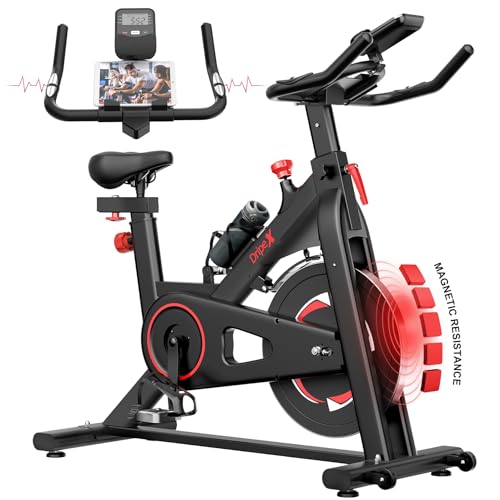
Stationary bikes allow you to vary your intensity of pedalling. Start by choosing a challenging speed and gauge the intensity of your workout based on how you feel. For instance, on a 10-point scale of self-perceived exertion, you should try to stay at a level of about 6 or 7. As you progress in your exercise routine, you can increase the intensity and duration of your intervals from rest to work.
If you're cycling outside or in the gym high-intensity interval exercises can help you shed fat and increase your cardiovascular fitness. Researchers discovered that cyclists who did HIIT exercises for 20 minutes on a stationary bike four days a week for eight weeks increased their oxygen consumption by 9percent. This is similar to what was observed in the group of those who exercised traditional cardio exercises over the same time frame.
The nature of the pedalling motion and the way that the stationary bicycle engages your legs develops leg strength in a natural way without putting stress on ligaments and joints. This is crucial for older people, those with knee or hip issues or those recovering from lower-body injuries or surgeries. Bicycles that are stationary can also be a good alternative to running which can cause joint stiffness and pain. It is not recommended for those who suffer from osteoarthritis.
The stationary bicycle is an essential piece of equipment for athletes recovering from lower body injuries or operations. It lets them continue their training without putting unnecessary strain on their injured or surgically repaired joints. Additionally, it can be used to increase the strength and endurance of the legs during rehabilitation.
Cycling Indoors
Many fitness studios offer classes on stationary bikes that are taught by instructors. inside bike trainer may come with multiple options for adjustment to suit a variety of body types, and they generally have a weighted flywheel to mimic the effects of inertia and momentum. They may also have pedals with toe clips, similar to those found on sports bikes or receptacles that are clipless to use with cycling shoes. Many pedals have a device that lets you adjust the resistance or tension. Some are dual-action.
The pedaling action of a stationary bicycle can strengthen the muscles of the glutes, legs and quadriceps. This is especially true if you ride at a higher intensity. The core muscles are also pushed by pedaling. If the bike has handles that can be used, the back and arms can be worked. If you do a cycling exercise that requires you to stand on pedals and work your calves, you'll also strengthen the tibialis posterior muscles on the front of your leg.
There is evidence that suggests that cycling may help lower cholesterol and triglyceride levels in the blood, and it improves cardiovascular endurance and flexibility. In one study, participants rode for 45 minutes three times a week over 12 weeks. They burned an average of 1,200 calories for each session and shed body fat while gaining endurance.
Indoor cycling is a low-impact activity that can be done by anyone of any age and body mass indexes, and it can be beneficial to those who are overweight or suffer from ailments like knee or back pain. In general, people who are a novice to exercise or suffer from a medical condition should consult their physician prior to beginning any exercise.
Forearm and wrist injuries are common on stationary bikes. It could be caused by improper gripping the handlebars, or incorrect positioning. It's also important to remember that if you bike for too long or over an extended period it could strain the muscles in the back. If you are experiencing this kind of pain, you can try reducing the duration of your workout or intensity or adding additional strengthening exercises to your routine. Cross-training with other activities, such as walking or jogging can help to prevent these injuries.